Security personnel hire
SIA-licensed staff, stewards and overnight cover, booked by shift. Booked by shift, planned from your risk assessment.
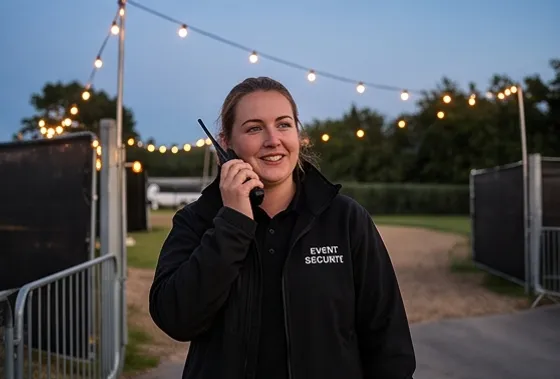
Event security typically costs £18 to £28 per hour per SIA-licensed officer with 4 to 6 hour minimum shifts. The planning baseline is 1 officer per 100 guests (risk-assessed up or down), plus overnight cover for multi-day site builds. Door supervision at licensed bars must be SIA badge holders.
Security is a personnel service, not a hire item: it books by shift, not by delivery date. The mix matters: SIA-licensed officers are legally required for door supervision and licensed-premises roles, while volunteer or professional stewards handle wayfinding, car parks and gates. A sensible plan puts badges where the law and the risk are, and friendly hi-vis everywhere else.
The under-bought line is overnight cover: a festival site with a built stage, PA and generator sitting in a dark field is an insurance claim waiting for a van. One officer and a dog handler cost less than the excess.
Rural shows, county fairs and farm weddings across this corridor tend to under-plan security because the site feels safe: it is the open gate, the unmanned car park on a public road and the cash bar running late that create the actual risk, not the postcode. Book the same firm that quotes your fencing and bar where possible; one supplier who has walked the whole site plans a tighter, cheaper roster than three quoted in isolation.
PLANNING RATIOLicensed events plan from a risk assessment; the crude baseline is 1 SIA officer per 100 guests, minimum 2, plus overnight kit-watch on multi-day builds.
What it costs
| Item | Typical guide price | Notes |
|---|---|---|
| SIA officer, per hour | £18–£28 | |
| SIA officer, London rates, per hour | £28–£40+ | |
| Overnight static guard, 12h | £220–£340 | |
| Dog unit, per night | £280–£450 | |
| Steward (non-SIA), per hour | £14–£20 |
Guide prices exclude VAT and vary with season, region and site access. Quotes from suppliers are always the real number.
Security personnel hire across the launch corridor
Local pages for every corridor town, with the same honest ratios and local site knowledge.
Security personnel hire: questions organisers ask
How many security staff does my event need?
Start from 1 per 100 attendees for licensed events, minimum 2 so no one works alone, then adjust on risk: alcohol service, cash on site, evening finish, and crowd profile. Unlicensed daytime community events often need stewards rather than SIA officers, which halves the cost.
What is the difference between a steward and SIA security?
Stewards guide, marshal and observe: car parks, gates, crossing points. SIA-licensed officers can perform guarding and door supervision duties: searches, ejections, licensed-premises door work. The law draws the line at those duties, so the roster should too.
Do I need security for a private wedding or party?
There is no blanket legal requirement for a private wedding on private land, but it becomes a sensible non-negotiable from around 100 guests upwards, and effectively mandatory the moment there is a licensed bar, a car park off a public road, or a late finish. The common industry benchmark is one officer per 75 to 100 guests, minimum two so nobody works alone.
Can I use friends or in-house staff instead of hiring SIA security?
Genuinely voluntary help, or staff you employ directly rather than book through an agency, do not need an SIA licence for guarding duties. The licence requirement bites the moment you pay a security company for a contracted guarding or door supervision service, which is how almost all event security is actually booked. For anything with alcohol on sale or public access, licensed cover is the safer call regardless of the legal minimum.
How far in advance should I book event security?
Four to eight weeks is a safe general window; six months out for a peak-season Saturday show or festival, since agencies roster their best crews first. Short-notice cover (under two weeks) is often still possible for a small wedding or party, but expect a smaller supplier pool and higher unsocial-hours rates for evening and overnight shifts.